Is GIFT City Real Estate a Good Investment in 2026? Returns, Risks & Future Growth Explained
February 26, 2026
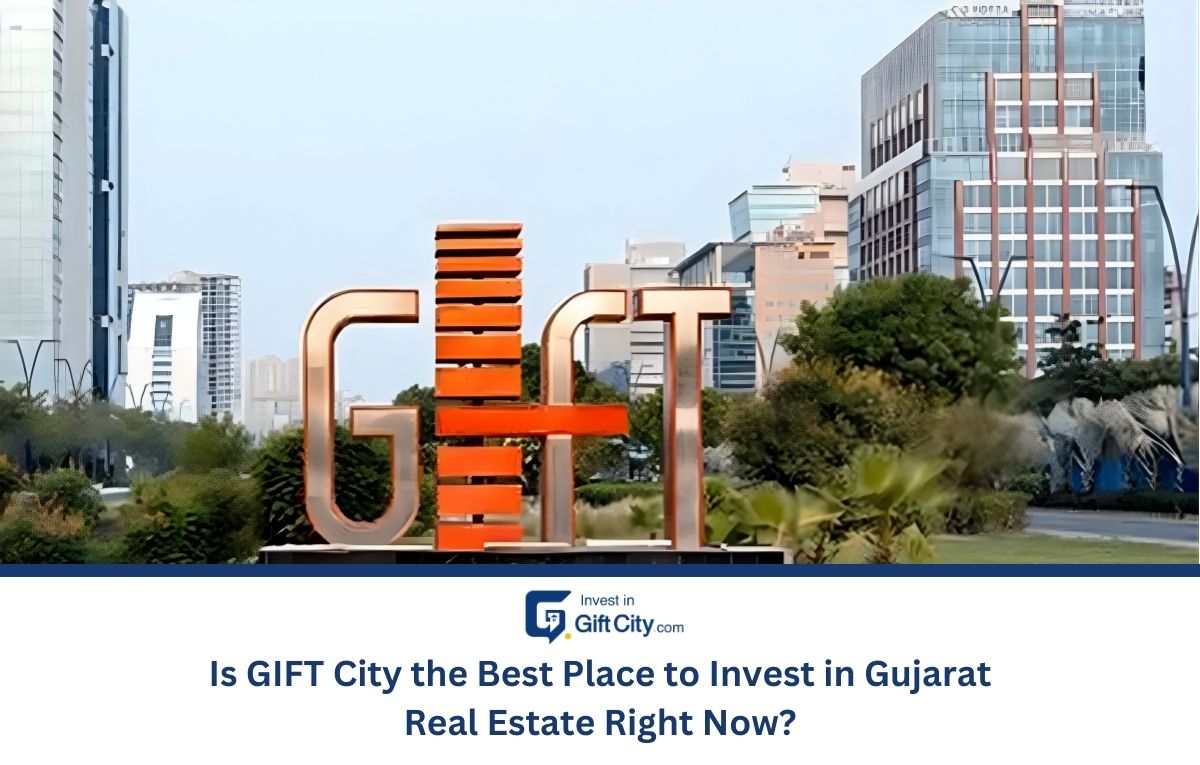

GIFT City real estate investment has become one of the most talked-about opportunities in Gujarat’s property market. As India’s first operational smart city and International Financial Services Centre (IFSC), GIFT City combines regulatory incentives, global corporate demand, and long-term urban planning — all factors that influence both returns and risks. Below is a detailed, balanced look at what serious investors should know before stepping in.
Property prices in GIFT City have shown strong appreciation over recent years. According to real-estate consultancy data, land values and residential capital values have risen significantly since 2019, reflecting growing investor interest and market confidence.
Such appreciation has been driven by sustained demand from professionals working within the IFSC and SEZ zones, as well as early investor interest in modern residential stock.
Rental performance in GIFT City is often cited as one of the stronger draws for investors:
Residential rental yields — especially for 1 BHK and 2 BHK units — are reported to be in the range of 4% to 6%, which is higher than typical yields in cities like Mumbai and Bengaluru.
This is partly due to consistent demand from corporate employees who prefer living near work and are willing to pay a premium for convenience and a quality lifestyle.
GIFT City is not just residential — its commercial real estate segment is growing rapidly:
Global reinsurers, banking giants, and fund managers are establishing operations in the IFSC.
The recent tax holiday extension for businesses operating here (now up to 20 years) is expected to drive even more corporate demand for office space.
These strong fundamentals bring higher occupancy, stable rents, and improved asset values in commercial segments — a significant draw for long-term investors.
While GIFT City has made substantial progress, it’s still young compared to established global financial hubs. The regulatory framework and operational norms continue evolving, which can introduce uncertainty for property investors.
This means that while incentives are attractive now, policy changes or economic shifts could impact future performance.
The physical infrastructure — though world-class in parts — and the full suite of social infrastructure (schools, malls, entertainment zones) are still evolving. This affects short-term residential demand and lifestyle value, especially for families considering relocation to the city.
Investors should distinguish between long-term fundamental growth and short-term livability enhancements.
Rapid interest and early appreciation have pushed property prices higher compared to surrounding regions. While this reflects strong investor confidence, it also raises the entry cost and may compress near-term returns for some buyers.
Like any large financial hub tied to global markets, GIFT City is susceptible to:
Economic cycles
Currency fluctuations
Global investment flows
These broader factors can influence property sentiment and impact returns in ways that are difficult to predict with certainty.
GIFT City’s ability to attract international firms — including reinsurers, asset managers, and banks — sets the stage for ongoing demand in commercial property and boosts ancillary residential demand.
A thriving corporate ecosystem often leads to multiplier effects — more jobs, higher disposable income, and increased need for quality housing.
Government incentives aimed at positioning GIFT City as a global financial hub provide structural support for property value growth. This includes extended tax benefits and frameworks that encourage capital inflows and business setup.
Long-term investors may benefit from consistent demand driven by both domestic and international economic activity.
The smart city is continuing to expand in phases, with plans to scale its built-up area and integrate modern transit connectivity. This future readiness attracts investors looking for assets that benefit from long-term urban growth trajectories.
Strong historical appreciation trends
Above-average rental yields
Growing corporate presence drives demand
Policy incentives and tax benefits
Attractive for both residential and commercial portfolios
Newer market with evolving regulations
Social and retail infrastructure is still maturing
Higher entry costs compared to nearby traditional markets
External economic volatility can influence returns
GIFT City real estate investment offers compelling long-term potential thanks to global corporate interest, strong rental performance, and supportive policy frameworks. While prices have risen and social infrastructure is still coming together, the core fundamentals — including smart infrastructure, IFSC positioning, and corporate demand — suggest this market is suited for investors with a long-term horizon rather than those seeking quick profits.
If you’re considering investing here, it’s wise to assess your risk appetite, investment timeframe, and preferred balance of residential vs. commercial exposure.